




Technique Training: The 4 Pillars Every Tennis Coach Must Master
Ico Humic · 8 min read
"What is there to comment on?" That is the question often asked by those who have never had the opportunity to train — or to watch someone train technique with a top-level coach. The truth is, you need a bit of luck to end up in the hands of such a person. David Cahill, one of the most respected coaches in professional tennis, once said he had the opportunity to work with technique experts and that he neither can nor wants to compare himself to them. How many club coaches would say the same?
Technique training is far more than repetition of strokes. It is a complex, multi-layered process that requires deep understanding of biomechanics, tactics, physical preparation, and the mental dimension of the game. Most coaches focus on one or two of these dimensions. The best coaches integrate all four.
The Four Dimensions of Technique Training
Technique training has four key aspects — and knowing which one is limiting your player is the most important diagnostic skill a coach can develop.
The Biomechanical Dimension
This refers to understanding body movement, angles, levers, and efficiency of stroke execution. It includes analysis of the kinetic chain, body positioning, and how force is transferred to the ball. A biomechanically sound stroke looks effortless — because it is. Poor biomechanics means the player is fighting their own body on every shot.
The Physical Dimension
Strength, speed, flexibility, and endurance are prerequisites for executing technical elements at a high level. Physical preparation enables the body to support demanding movements and — critically — to repeat them consistently throughout an entire match. Technique that breaks down in the third set was never truly mastered.
The Tactical Dimension
This is where technique transforms into weaponry. Individual strokes combine into tactical sequences that place opponents in unfavorable positions. A technically excellent player who cannot read when and how to use each variation is only half-developed.
The Mental Dimension
Mental strength enables a player to apply learned technique under pressure. Focus, confidence, and emotional control are not personality traits — they are trainable skills. A player who executes perfectly in training but not in matches has a mental technique problem, not a physical one.
Knowing which segment is weakest is the starting point for every training plan. But is that the end of the variations? Not even close.
Why One-Size-Fits-All Technique Is a Myth
Technique for a player who is 175 cm tall and one who is 195 cm tall is not — and cannot be — the same. Differences in height directly affect optimal stroke angles, the contact height with the ball, and court coverage patterns.
Similarly, slender body types and athletically muscular players require individualization across all aspects of technique training. Body structure affects center of gravity, explosiveness, range of motion, and the endurance of specific muscle groups.
A technique program copied from another player — no matter how successful that player is — will create limits, not possibilities. Individualization is not a luxury. It is the foundation of every serious coaching relationship.
Your Dominant Shot Does Not Have to Be a Bomb
One of the most common misconceptions in tennis development: the idea that a dominant shot must be powerful. It does not.
A truly dominant shot can be the ability to vary speed, spin, height, and depth using just one stroke. This flexibility within a single technical foundation makes a player unpredictable and difficult to read — far more dangerous than raw power alone.
Technical-tactical combinations — power shots, approach shots, lobs, or passing shots — are all the result of methodical technique training.
"Perfect technique enables top-level tactics. Weapons in tennis are not individual shots by themselves — they are combinations that push the opponent into an uncomfortable zone."
Footwork — The Foundation Most Coaches Underestimate
We often discuss technique without mentioning footwork. But without perfect footwork, there are no top-level strokes.
The biggest challenge in tennis is getting to the ball and setting your balance before the stroke. If that is achieved, there is a high probability the ball will go exactly where you intended. That is why, from a technical perspective, movement training is the most important — and most undervalued — component of technical development.
The saying is old, but it is precise: tennis is played with the legs and won with the head.
Footwork has four distinct training dimensions: technical (learning optimal movement patterns), physical (speed and endurance intervals), coordination-based (Big Five system), and tactical (defining when to attack versus stay in the rally based on court position and balance).
Dead Ball, Semi-Live, Live — Why the Order Always Matters
The principle of methodical and progressive work requires starting with simpler content and building up. Some players — and coaches — resist this.
"Dead ball drills? That is for beginners." No. That is not accurate.
At least 50% of professional players use dead-ball refinement for both basic and specialty shots. Proper dosing of difficulty and load is the difference between building precision and building habits that will cap a player's ceiling.
The progression — dead ball, semi-live ball, live ball — is not a beginner curriculum. It is the professional standard for technical refinement at every level.
What Top Players Actually Look Like — and Why
Shadow swings are fundamental to learning technique. Without the ball, movement is easier to isolate — which is exactly why many coaches classify a top-level stroke as one whose trajectory and rhythm are identical to the shadow swing.
Top players play easily, relaxed, and rhythmically. They have softness, rhythm, and cleanliness in their stroke execution. This is not a personality trait. It is the result of years of correctly dosed technical work — from the first tennis school session to the professional circuit.
Technique must never become a limiting factor when strength and speed start to play a decisive role in results. Without a top-level technical foundation, that transition is impossible. The foundation must be built early — and built right.
Key Takeaways for Coaches
All four dimensions — biomechanical, physical, tactical, mental — must be integrated into every training plan, not addressed in isolation.
Individualization is not optional. Height, body structure, and individual characteristics all require a customized approach.
A dominant shot is not a bomb — it is mastery of variation within one stroke.
Perfect technique enables top-level tactics. Combinations win matches, not individual shots.
Footwork is the foundation. Without correct positioning and balance, there are no quality strokes.
Start with dead ball. Move to semi-live. Then live ball. Always dose properly.
Shadow swing is the reference standard for stroke quality at every level.
Top players play relaxed — softness, rhythm, and cleanliness are the result of quality technical work, not natural talent.
Technique must not limit development when power and speed become decisive. Build the foundation before it is needed.
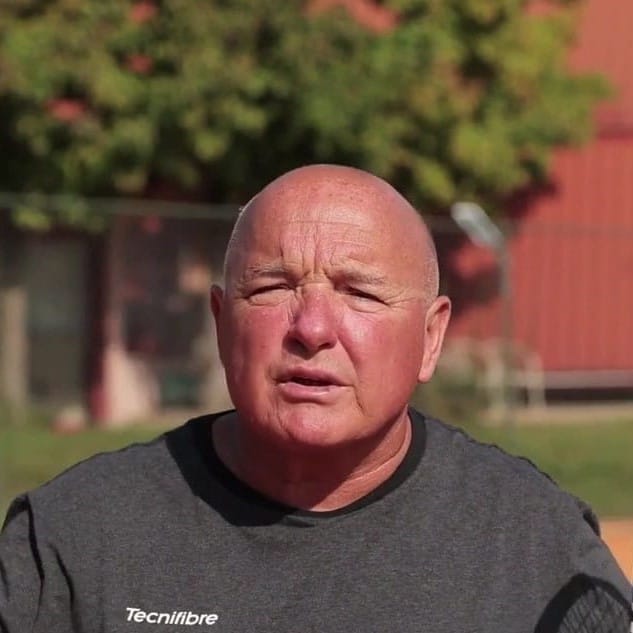
Ico Humic
Head Coach & Founder of Humic Tennis Education. 40+ years of elite coaching experience. University lecturer at the Faculty of Kinesiology, University of Zagreb. National Junior Selector, Croatian Tennis Federation. Alumni: Marin Čilić (ATP Top 10), Silvija Talaja (17 WTA).
Popular posts
By HTE on Feb 16, 2026
By HTE on Feb 16, 2026
About this blog
Practical knowledge from 40+ years of elite tennis coaching. For coaches, parents, and serious players who want to understand the full picture.


NEWSLETTER
Get practical tennis insights delivered to your inbox. Coaches, parents, and players.
© 2026 Humić Tennis Education. All rights reserved.