



The 25 Training Systems Every Serious Tennis Coach Should Know
Ico Humic · 8 min read
Most coaches work with the same 5 or 6 training types, week after week. A drill here, some live ball there, maybe a match at the end. They call it a session. They call it development.
It isn't.
Elite tennis development — the kind that actually moves a player from club level to competitive level, from competitive level to pro level — requires a structured system of 25 distinct training types, each designed for a specific purpose, applied at a specific time, in a specific dosage.
This is not a theoretical framework. It is the system built over 40 years of work at the ATP and WTA level, refined through thousands of training sessions, and now presented here for the first time in its complete form.
Why 25? The Logic Behind the Number
The number is not arbitrary. Each of the 25 training systems addresses a different dimension of player development — physical, technical, tactical, mental, or a combination of all four.
Some systems are used daily. Some appear only in specific microcycle phases — pre-tournament, preparatory, inter-tournament. Some are applied for five minutes at the start of every session. Others become the entire focus of a training week.
The question is never whether to use them. The question is when, how much, and in what sequence.
That dosage — that periodization intelligence — is what separates a coach who develops players from one who simply occupies court time.
The 25 Training Systems — An Overview
Here is the complete list, with the core principle behind each one.
01 — Big Five
Big Five develops the five foundational athletic qualities for tennis: orientation, coordination, reaction, balance, and feel. It works from the first day a five-year-old picks up a racket all the way through professional training. It is used with and without a racket, on court and off — anywhere, in any situation.
In one word: agility. In another: nimbleness. The ability to connect hand speed with foot speed, and the eye with both.
02 — Imitations (Shadow Swings)
A stroke is only as good as its shadow. Imitations train the rhythm, softness, and cleanliness of movement without the pressure of a ball — so that when the ball arrives, the movement is already automatic.
All younger pro-level players use imitations as self-training. They arrive to practice ready — like a tiger, like a panther. Not warming up. Ready.
03 — Technique Training
Superior technique enables brilliant tactics. This is the foundational premise. Without technical weapons, there is nothing to build tactics on.
Technique training begins with control — error-free ball keeping — and progressively adds acceleration, spin, direction change, and combination play. It is never finished. It never stops developing.
04 — Concentration Training
Every professional training session begins here. 200 balls over the net. Each player: 100. The task is not technical — it is mental. The task is to not miss.
Tennis is defined as a game of errors. Concentration training is where we learn to be error-free — and where mental training begins, long before anyone calls it mental training.
05 — Technical Coordination Training
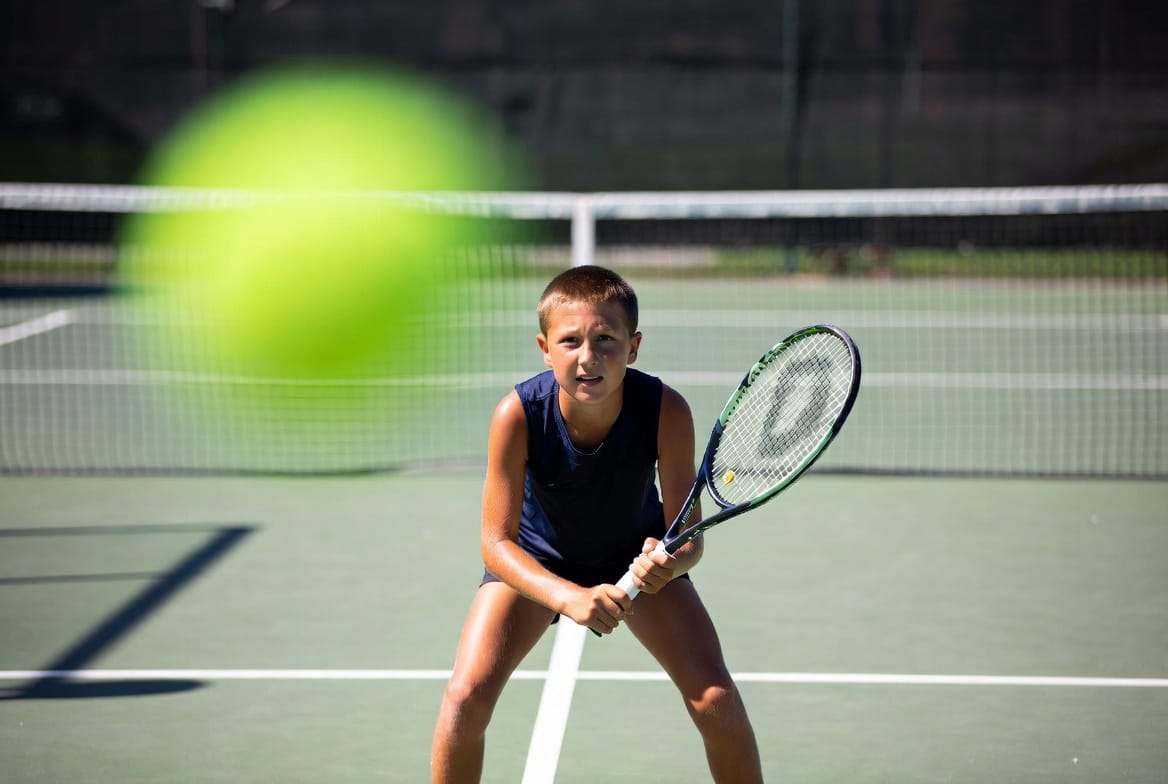
If technique training teaches individual strokes, technical coordination training teaches sequences. Two, three, four, five strokes connected — baseline to net, diagonal to line, attack to finish.
Dead ball first. Then semi-live. Then live. The sequence is not optional. Skipping it produces players who hit beautifully in isolation and collapse in combinations.
06 — Tactical Selection Training
The player stands at the T-line. The coach feeds from behind. Approach, volley, smash — in sequence, in rhythm, with decisions. No panic. No forcing. Reading what comes and choosing the correct response.
This is where tactical intelligence begins to form — not in a match, but in this calm, structured environment where decisions can be practiced before pressure arrives.
07 — Precision Training
"I have an excellent forehand triangle." Do you? Mark the zone. Count 20 shots. See how many land.
Precision training removes subjectivity from coaching. It shows the player — and the coach — exactly what the real level is. It is also one of the most important diagnostic tools available.
08 — Speed Training
A tennis player is a sprinter who can play forehand and backhand. At two steps from the ball, most players look good. At full sprint — left, right, forward, backward — that is where the real level is revealed.
Speed, if not worked on daily, declines. Speed, worked on every day in small doses, grows cumulatively. The goal: full sprint, same quality as standing still.
09 — Speed Endurance Training
Not one or two balls at speed. Four, six, eight balls — depending on the surface. By the fifth or sixth ball, oxygen disappears. Quality must not.
Speed endurance training prepares the player for exactly what happens in matches: sustained high-quality execution when the body is already under load.
10 — Reaction Training
The fastest form of training. The player works constantly from the uncomfortable zone — finding ways to control the ball when there is almost no time to do so. Sometimes neutralize. Sometimes attack.
This is where the player learns what they are genuinely good at under pressure — not what they think they are good at in comfort.
11 — Technical-Tactical Training
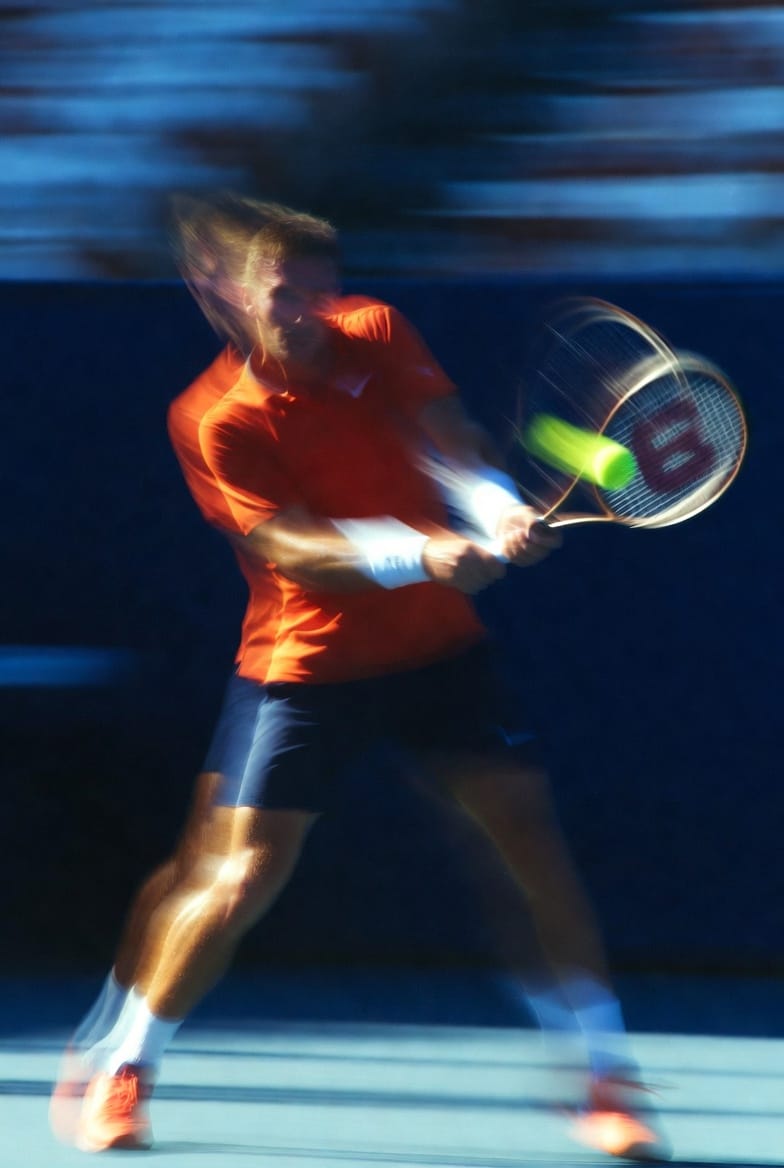
The beginning of the point. The middle of the point. The end of the point. Trained separately — because each phase has different demands, different weapons, different tactical logic.
Diagnostics define which phase a player dominates and which they lose. Training is then directed accordingly: 66% on what is weak, 33% on what is strong.
12 — Zone Training
An excellent system for the middle of the point. But its deeper purpose is psychological: simulating the score, observing whether the player's execution changes when the number on the scoreboard changes.
The best players play every point the same. Zone training is where that habit is built.
13 — Winner Training
Number 13 — perhaps unlucky for those who watch YouTube highlights and try to build their game on winners alone.
Winner training begins at age 11. A little. Carefully. Its purpose is twofold: to develop maximum speed control over time, and to show the player exactly how many errors appear when risk is increased. Both lessons are essential.
14 — Feeling Training
The most underrepresented element in modern coaching. Touch. The lob. The drop shot. The surprise. Winning does not only mean overpowering. Sometimes it means outplaying — a calm crosscourt spin after three power exchanges, a drop shot from an unexpected position.
Alcaraz and Sinner must surprise each other. Your 11-year-old must be capable of surprising their opponent. Feeling training is what makes the players people love to watch.
15 — Endurance Training
From age 12–13. Intensity at 70–80%. But endurance here is not only physical — it includes mental endurance and technical quality under sustained load. Learning to be patient. Learning to mix. Learning that consistency across ten exchanges is worth more than brilliance across three.
16 — Training 100
From age 13. Absolute maximum. The highest possible exchange pace, the most demanding sprint requirement, the greatest mental pressure. Also a diagnostic benchmark — defining where the player is, and what the target is for the next six to twelve months.
17 — Handicap Training
Remove the forehand. Remove the first serve. Remove the diagonal. Now play.
Handicap training builds depth, forces tactical creativity, and develops the mental resilience to compete without a dominant weapon. It also teaches something deeper: what it means to win with quality rather than habit.
18 — Tactical Training — Live Play
Match play with structure. Set training with commentary on every point. Then sparring sets with limited intervention. Then free play with handicaps.
The pre-tournament microcycle always includes this progression. Pressure must be trained before it is encountered. A player who meets pressure for the first time in a tournament has already lost.
19 — Silent Training
The coach is not present. Or appears not to be. The player is observed from a distance — everything recorded, nothing corrected in the moment.
This is where the coach sees who the player truly is. Not the player who performs for the coach. The real player. It is essential information.
20 — Thematic Training
25 to 35 percent of total training time. Reserved for the individual — for what this specific player needs. Their weapons. Their gaps.
If your training sessions do not include thematic time, you are not working at the individual level. You are managing a group. There is a significant difference.
21 — Theory Training
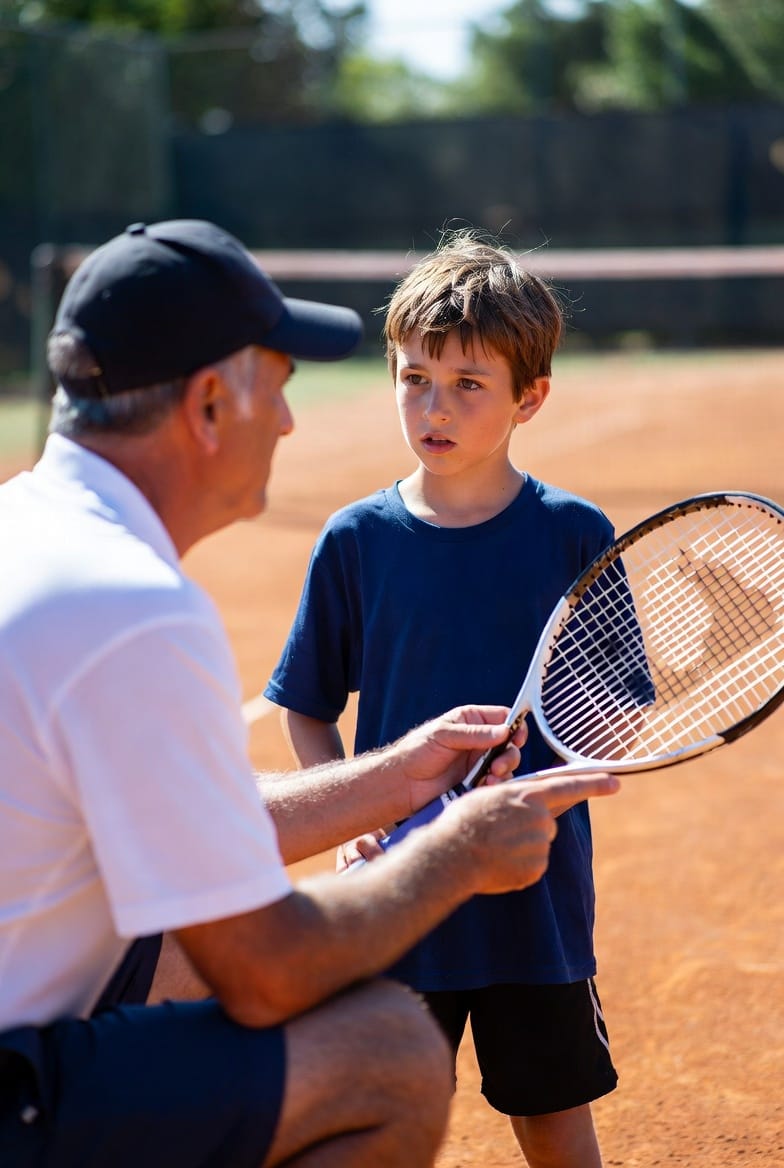
Sending a player onto the court without theoretical preparation is a coaching failure. A 12-year-old needs to know: what is the smart court? How do professionals use it? What is the tactical key? How do you talk to yourself between points?
Tennis is harder than mathematics. In mathematics, you sit at a desk in silence and reproduce what you learned. On a tennis court, gravity, wind, sun, a wet grip, the opponent's mind, and a watching parent all interfere simultaneously. Theory training is where players learn to navigate that complexity before they face it.
22 — Physical Conditioning
The fitness coach makes the player explosive, fast, enduring, strong. That is 50% of physical preparation.
The other 50% is tennis-specific footwork — the ability to arrive at the ball in balance, enter the stroke correctly, exit efficiently, and be ready for the next ball. That 50% can only be taught by a tennis coach. Not a fitness coach. The roles are distinct, and confusing them costs players years of development.
23 — Mental Preparation
Michael Jordan. Number 23 for a reason.
Mental training is not something done in a psychologist's office. It is an integral part of every training session — concentration training, zone training, handicap training, silent training. All of it builds the mental structure.
Tennis is played with the legs. It is won with the head. The intellectual component is what the player knows. The mental component is the ability to apply it under pressure. Both must be trained. Neither happens by accident.
24 — Drill Training
Drill is the most focused form of individual work. One narrow segment, repeated until it reaches a level where it can no longer be easily attacked. A weakness transformed into neutrality. A strength transformed into a weapon.
A well-drilled player. We have all seen one. That is what drill training produces.
25 — Self-Training
Cristiano Ronaldo reached the level of one of the greatest athletes in history through self-training. Dražen Petrović. Michael Jordan. Mike Tyson.
Self-training is not only physical. It is studying. Video analysis. Reading. Life hygiene, nutrition, sleep, recovery. It is building a relationship with the pro-level program — a daily, disciplined relationship that exists outside of supervised sessions.
You can train all 25 systems brilliantly from morning to night. Without 10 hours of sleep, without discipline outside the court, without the self-training mindset — none of it compounds into results.
Self-training is where champions are built when no one is watching.
The Question Every Coach Must Ask
Look at your last five training sessions. How many of these 25 systems appeared? In what dosage? In what sequence?
If the answer is "three or four, more or less randomly" — that is not a criticism. It is an opportunity. Because the complete system exists. It has been tested across four decades, from tennis playschools to ATP and WTA level. It works.
The question is whether you are ready to use it.
Key Takeaways
Elite development requires all 25 training systems — each has a specific purpose that no other system replaces
Dosage and sequence matter as much as the systems themselves — this is periodization intelligence
The 66/33 principle: train what is weak 66% of the time, train weapons 33%
Self-training is System 25 for a reason — without it, the other 24 cannot compound
Theory is not optional — a player who cannot think on court cannot win on court
Mental training is embedded in every session, not reserved for a psychologist
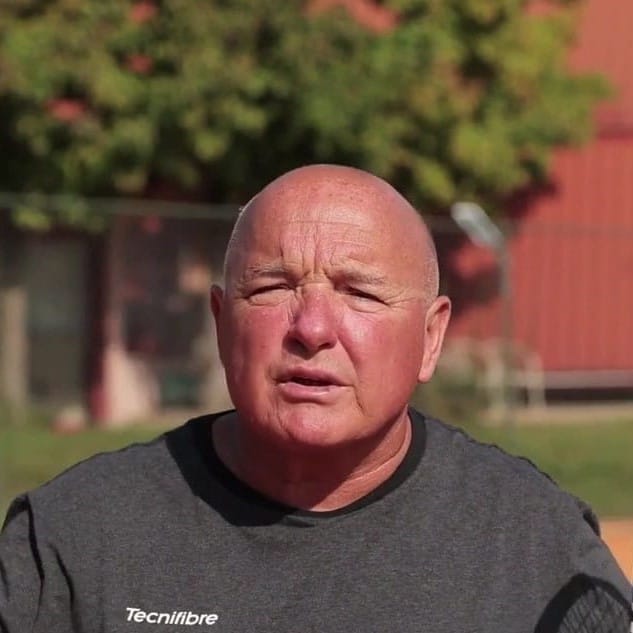
Ico Humic
Head Coach & Founder of Humic Tennis Education. 40+ years of elite coaching experience. University lecturer at the Faculty of Kinesiology, University of Zagreb. National Junior Selector, Croatian Tennis Federation. Alumni: Marin Čilić (ATP Top 10), Silvija Talaja (17 WTA).
Popular posts
By HTE on Feb 16, 2026
By HTE on Feb 16, 2026
About this blog
Practical knowledge from 40+ years of elite tennis coaching. For coaches, parents, and serious players who want to understand the full picture.


NEWSLETTER
Get practical tennis insights delivered to your inbox. Coaches, parents, and players.
© 2026 Humić Tennis Education. All rights reserved.