




Why Self-Training Decides Who Reaches Pro Level
Ico Humic · 8 min read
Two players. Same talent. Same coach. Same hours on the court. Five years later, one is competing at national level. The other has plateaued and doesn't understand why.
I have seen this scenario hundreds of times across four decades of coaching. And in almost every case, the explanation is not found on the court. It is found in the twenty-one hours a day that happen off it.
This is what separates players who reach their potential from players who don't: what they do when no one is watching.
Training System #25: Self-Training
In the complete Pro-Level development system, we work with twenty-five training systems. Each one has a specific purpose, a specific phase in the training week where it belongs, and a specific outcome it produces.
Self-training is number twenty-five. And it is not last because it is least important. It is last because it is the master key — the one that determines whether the other twenty-four can actually work.
Without self-training, a player can attend every session, receive every correction, understand every tactic — and still fail to develop at the rate their talent warrants. Because development does not happen on the court. It happens in the space between sessions, when the information delivered by the coach is either processed and integrated — or forgotten.
"When what you hate the most, you train as if you love it the most — then you are a true professional."
— Mike Tyson
What Self-Training Actually Is
Most people hear "self-training" and think: extra physical work. Ball machine sessions. Wall practice. Shadow swings in the garden.
All of that counts. But it is only one dimension of a much larger concept.
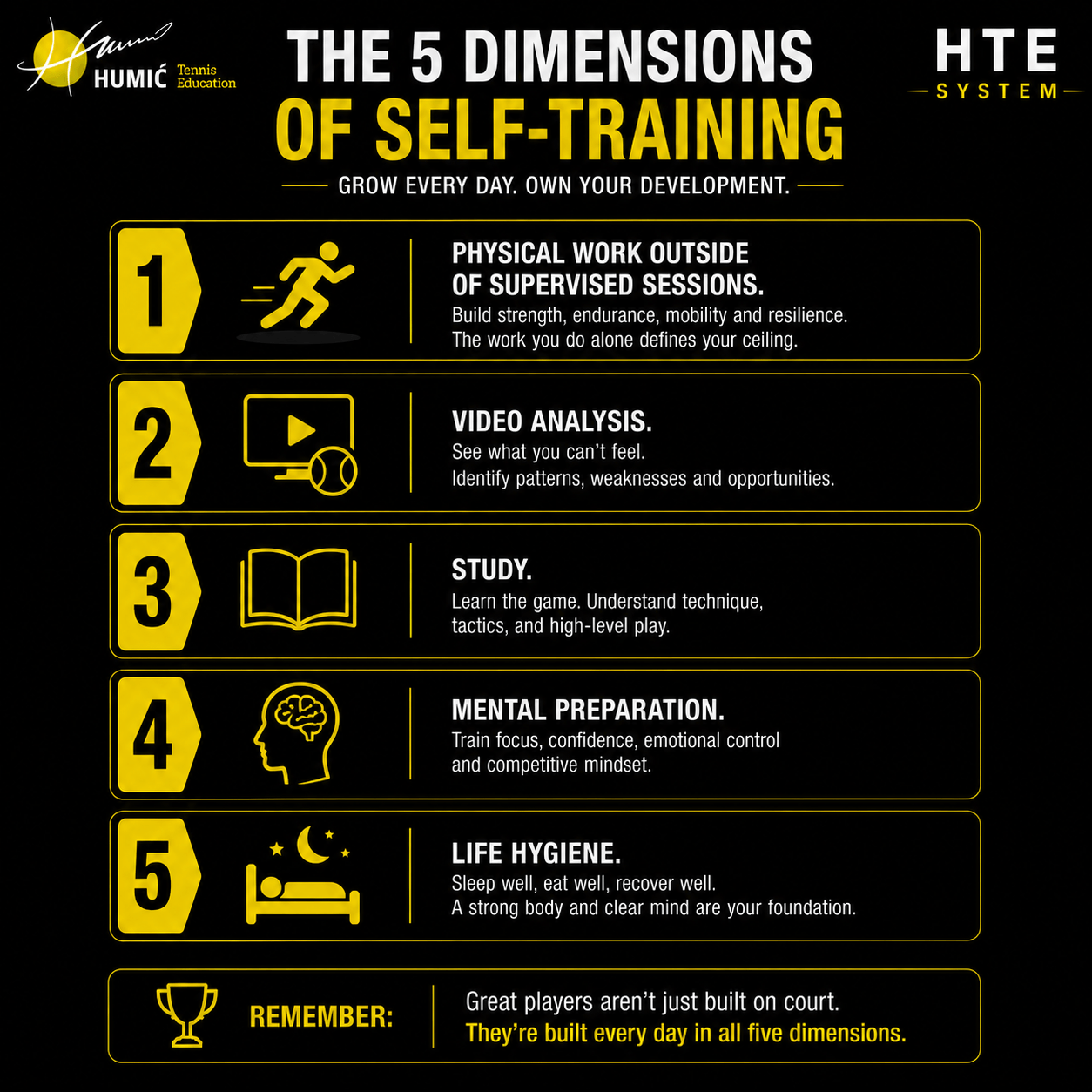
Self-training has five components — and the physical one, while important, is probably the least decisive of the five.
01 — Physical work outside of supervised sessions
Shadow swings, footwork patterns, ball wall practice, fitness work. The body needs repetition to encode movement. Twenty minutes of quality shadow swings at home is worth more than a rushed warm-up on court.
02 — Video analysis
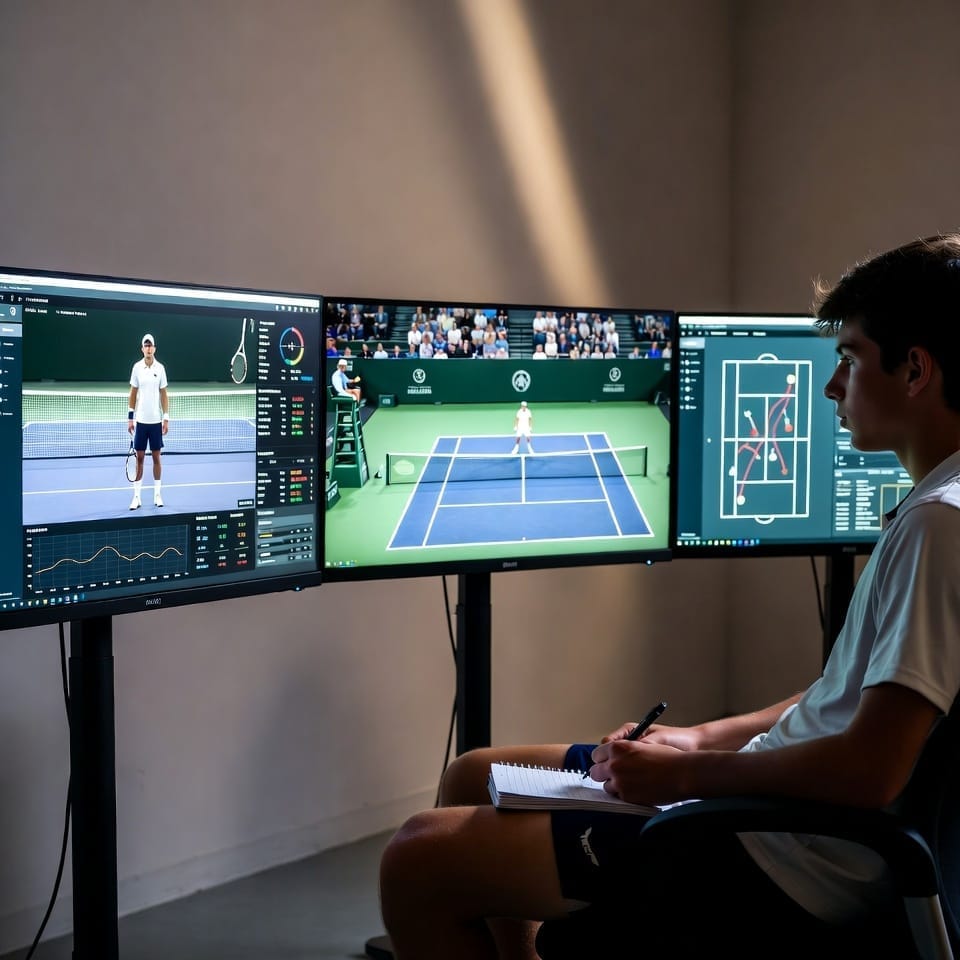
Watching your own matches and identifying patterns — not emotionally, but analytically. Where do you lose points? What does your movement look like under pressure? How does your first serve percentage change in the third set? Players who watch themselves honestly improve at a different rate than those who do not.
03 — Study
Reading books about tennis, sport psychology, training theory. Watching professional matches not for entertainment, but to answer specific tactical questions. Understanding the game at a conceptual level — not just executing patterns, but knowing why those patterns exist.
04 — Mental preparation
Self-coaching routines. Visualization. The between-point ritual. Managing the internal dialogue during matches. These are skills that must be practiced — not improvised on match day.
05 — Life hygiene
Sleep. Nutrition. Recovery. Schedule management. This is where most junior players — and many coaches — underestimate the impact. A player who sleeps six hours and eats poorly cannot absorb training at the same rate as a player who sleeps nine and eats well. The research on this is unambiguous. The practical reality is ignored too often.
The Players Who Show Us What This Looks Like
Cristiano Ronaldo is not the most naturally gifted footballer of his generation. By most measurable physical and technical indicators in his youth, he was not the standout talent. What made him the player he became — one of the greatest in history, by any definition — was the relentless, systematic self-training that continued long after training sessions ended.
Every day. Every year. Without exception.
Dražen Petrović became the best European basketball player of his era not because Zagreb had better facilities than Los Angeles. He became it because of what he did in the spaces between organized practice. He was famous for training alone, late into the evening, working on specific weaknesses, repeating movements until they were automatic.
Michael Jordan — cut from his high school team — did not become Michael Jordan by attending practice. He became Michael Jordan by what he did when no one required him to be there.
Tennis is no different. The players I have worked with who reached the professional level — without exception — had this quality. It was not the most obvious quality. It was not the first thing you noticed when you watched them play. But it was the constant, underlying engine of their development.
"Only those who truly want it and believe in it can advance."
— Ico Humić
What Coaches Need to Understand
If you are a coach, your role in self-training is more significant than you might think. You are not just responsible for what happens in the ninety minutes on court. You are responsible for giving the player a system for the other twenty-one hours.
This means:
📋 Assigning specific home tasks — not vague encouragement to "practice at home," but concrete, measurable assignments. Shadow swing the backhand approach fifteen times. Watch your match from Tuesday and identify two patterns. Read the chapter on tactical positioning before next session.
📋 Creating accountability — players send video of their home practice. Coaches review it. This single change raises the quality of home work dramatically.
📋 Educating on life hygiene — sleep, nutrition, and recovery are training variables. A player who does not know this will not manage them. A player who does will.
📋 Making theory a regular part of training — fifteen minutes of theory in a training session is not wasted time. It is the difference between a player who executes patterns and a player who understands why those patterns work.
What Parents Need to Understand
If you are a parent of a junior player, this concept matters to you in a specific way.
The home environment either supports self-training or it undermines it. A player who comes home from training to a chaotic schedule, poor food, irregular sleep, and a phone in their hand for three hours cannot access the recovery and mental space that self-training requires.
This is not about pressure. It is about environment. The most powerful thing a parent can do is create conditions — routine, quiet, adequate sleep, real food — that make the other four dimensions of self-training possible.
The second most powerful thing is to stop asking "did you win?" and start asking "what did you work on today?" That single shift in question changes the conversation from outcome to process — which is where development actually lives.
The Uncomfortable Truth
Self-training requires something that cannot be coached, scheduled, or enforced: the player has to want it.
Not want it when they feel motivated. Not want it when things are going well. Want it on the days when nothing worked, when the body is tired, when the results are discouraging. Want it even then.
This is what Mike Tyson described: doing what you hate, as if you love it. That is not a motivational phrase. It is an operational definition of what professional commitment looks like in practice.
A coach can teach technique. A coach can structure training. A coach can inspire. But a coach cannot provide the internal drive that makes a player go back to the wall at seven in the morning, or watch their match footage for the third time, or choose sleep over a social evening before a tournament.
What a coach can do is create a program that makes the value of self-training visible, concrete, and undeniable. When a player sees — through diagnostics, through measurable results, through their own video — the direct connection between what they do outside of sessions and what improves inside them, the motivation often takes care of itself.
Where to Start
If you want to begin implementing self-training as a genuine part of your player's development — or your own — start with these three things this week:
1 Assign one specific home task per session. Not "practice your forehand." Assign: "shadow swing your forehand twenty times, focusing on the finish position — send me a thirty-second video by Thursday."
2 Establish a sleep target. For players aged 10–13, the evidence-based recommendation is nine to eleven hours per night. Most junior players get significantly less. Set the target. Track it for two weeks. The improvement in training quality will be measurable.
3 Watch one professional match per week with a question. Not passively. With a specific question: "How does this player manage the transition from defence to offence?" or "What is the pattern in this player's second serve positioning?" Active viewing develops tactical intelligence that cannot be trained on court alone.
Self-training is the bridge between the court and the player's potential. Build that bridge — and everything else in the system works better.
The twenty-five training systems we use in the Pro-Level Program are each designed to work in combination with self-training. Without it, they are individually powerful. With it, they compound.
That compounding is what produces pro-level players.
Ready to build a complete self-training system for your player?
Download the free guide — 7 training methods every junior player needs, with the questions every parent should be asking their coach.
Get the Free Guide →Explore the Pro-Level Program →
Ico Humic
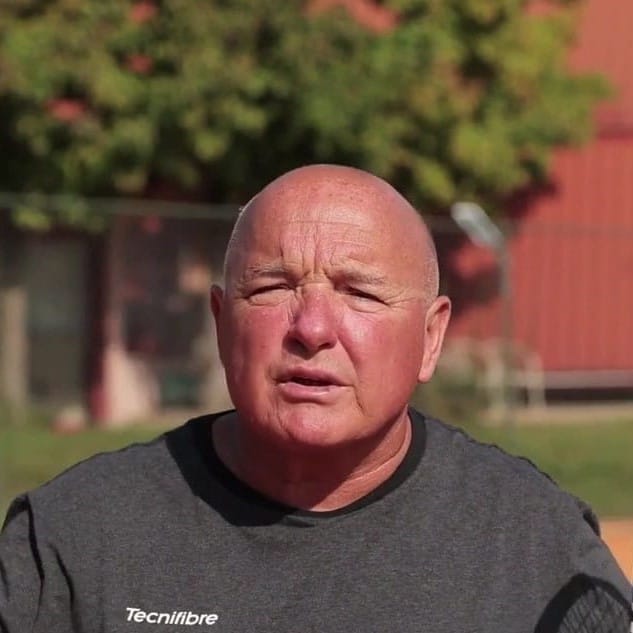
Head Coach & Founder of Humic Tennis Education. 40+ years of elite coaching experience. University lecturer at the Faculty of Kinesiology, University of Zagreb. National Junior Selector, Croatian Tennis Federation. Alumni: Marin Čilić (ATP Top 10), Silvija Talaja (17 WTA).
Popular posts
By HTE on Feb 16, 2026
By HTE on Feb 16, 2026
About this blog
Practical knowledge from 40+ years of elite tennis coaching. For coaches, parents, and serious players who want to understand the full picture.


NEWSLETTER
Get practical tennis insights delivered to your inbox. Coaches, parents, and players.
© 2026 Humić Tennis Education. All rights reserved.